25.09 Release notes
This release includes finding types for enhanced management, the addition of the EU AI Act option to the Document Checker dropdown, linked curated questions, a new ValidMind admin API reference, a new ValidMind public REST API reference, and more.
Backend
Enhancements
Add finding types to enhance organization and management
New features:
- Finding types system: You can now manage multiple finding types for Validation Issues, Policy Exceptions and Model Limitations with configurable fields and statuses, enhancing the organization and separation of findings.
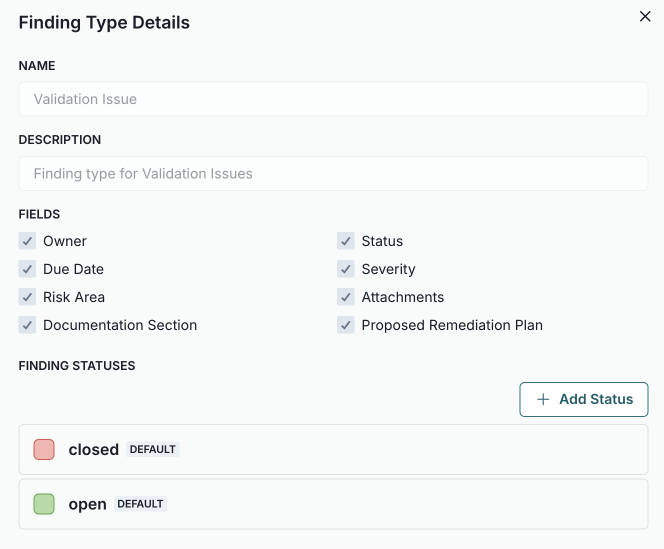
- Flexible field configuration: Each finding type allows you to show or hide specific fields such as
risk area,owner,severity, anddue date. - Type-specific statuses: Different finding types can have their own unique set of statuses.
- API updates: All finding-related endpoints now require a
finding_type_cuidparameter. - Route changes: Finding status endpoints are now scoped to specific finding types.
- Permission updates: A new permission model is introduced for managing finding types.
Improvements:
- Better organization: Findings are now categorized and organized by type.
- Export/import: Organization templates now include configurations for finding types.
Create an endpoint to highlight workflows needing user attention
This update introduces a new tasks feature that integrates closely with the existing workflow system.
Add public API routes for model stakeholders
This update introduces new API endpoints and associated handler logic to manage inventory model users (stakeholders) and organization users.
Add public API for creating model findings
This update introduces a new public API feature that allows you to create model findings.
Add public API for managing custom field values in findings
This update allows you to access and modify custom field values in model findings using the public API.
Add public API for model registration, skip registration workflow, and update model stage
This update enhances the ValidMind platform by introducing new public APIs that improve organization scoping in database queries and streamline inventory model stage management. You can now set a model's stage directly using the new API, allowing for more precise control over your model lifecycle.
Additionally, you can register an existing model through a dedicated API, simplifying the process of integrating models into your workflow. An API is also available to skip the on-model-create workflow, providing flexibility in model management and deployment processes.
These enhancements aim to streamline your experience with the ValidMind platform, making it easier to manage and organize your models effectively.
Add public API for specifying model dependency relationships
This update allows you to update model dependency relationships with a new public API, enhancing how you manage inventory models' dependencies.
Bug fixes
ValidChecker improves detection of evidence in model documentation
This update enhances the regulatory prompt instructions for ValidChecker recommendations. You can now recognize result descriptions, including specific numbers and insights presented in text form, as valid and actual results, even without tables or figures. This change aims to produce more consistent and reliable results across runs.
Frontend
Highlights
Implement finding types for enhanced management
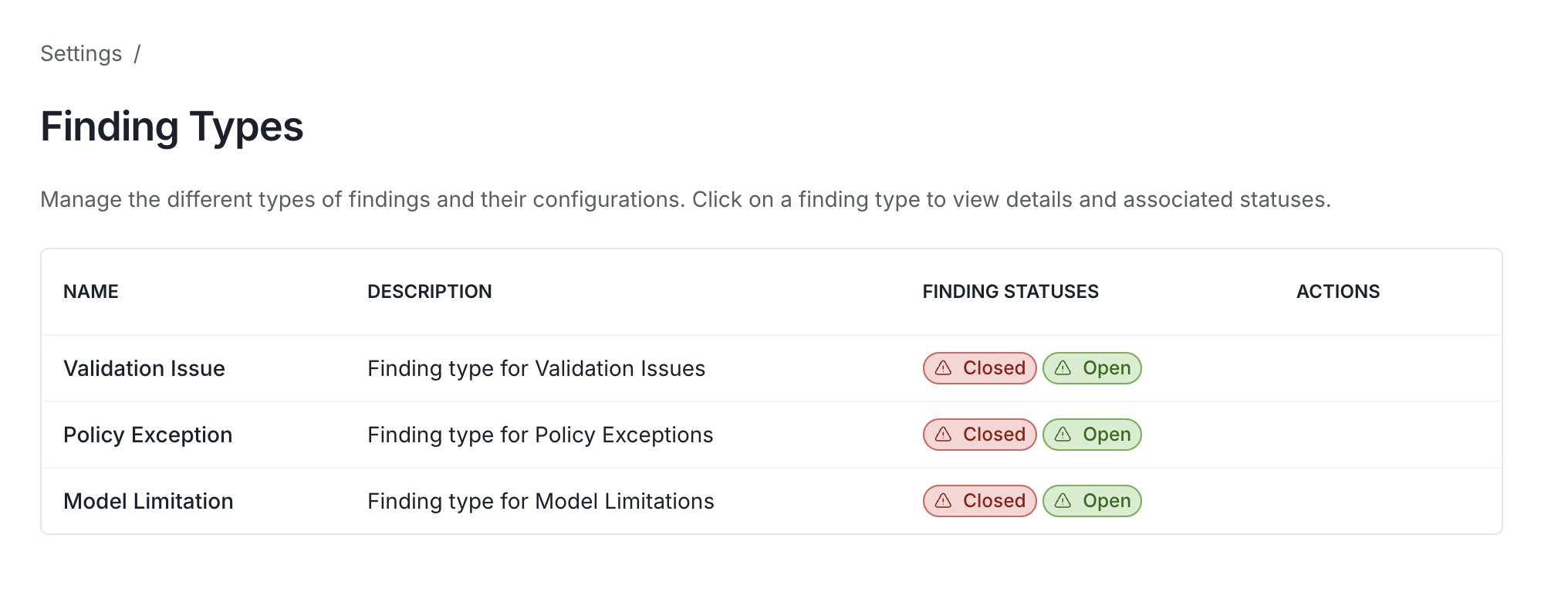
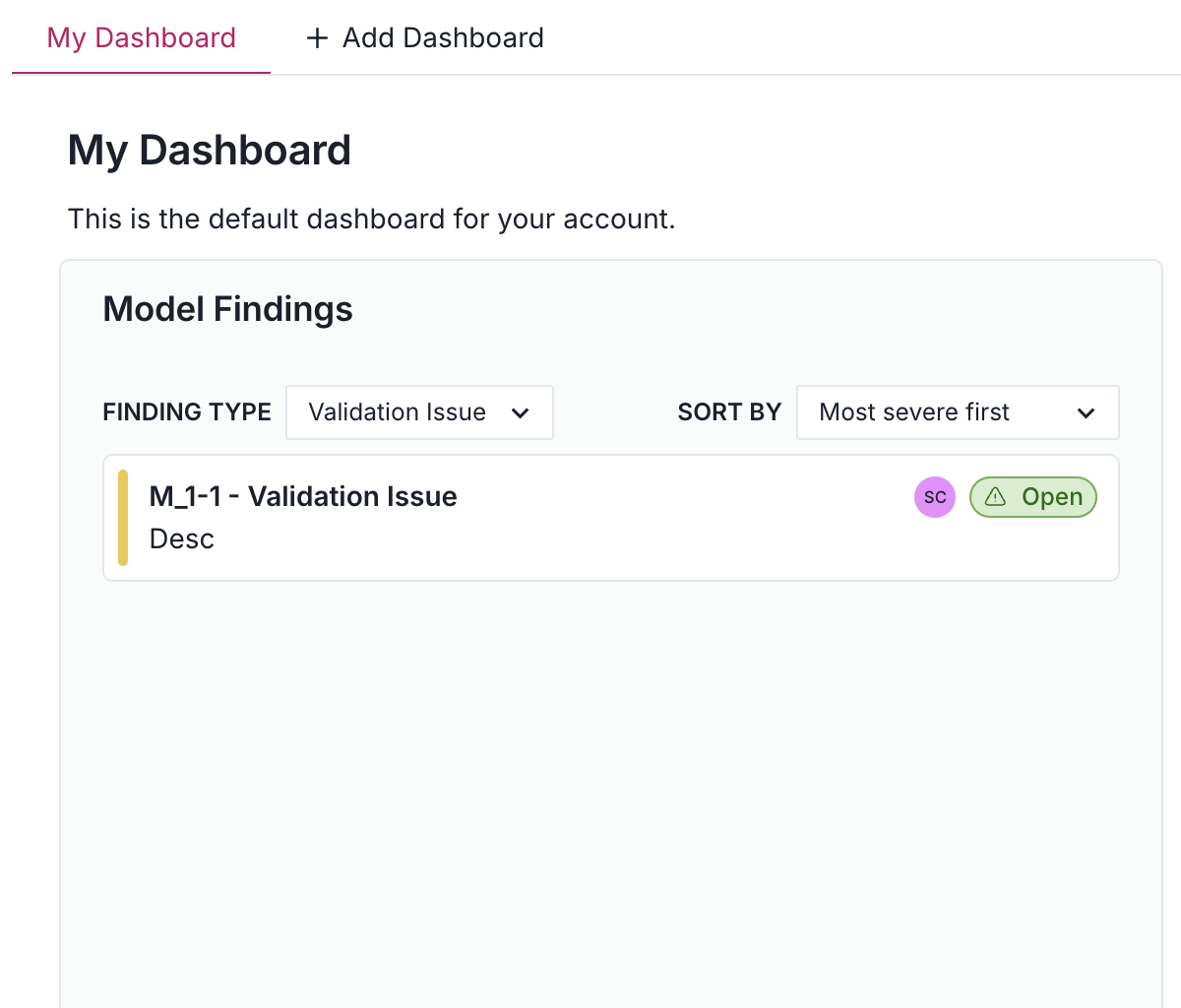
Findings are now organized into categories for Validation Issues, Policy Exceptions, and Model Limitations, each with specific field configurations and statuses: Manage finding types
- Finding types: Create and manage findings with type-specific fields.
- Finding creation: Select a finding type when adding a new finding.
- Status management: Customize statuses for each finding type.
- Settings: Manage your organization's finding type configurations in the new "Finding Types" section in settings.
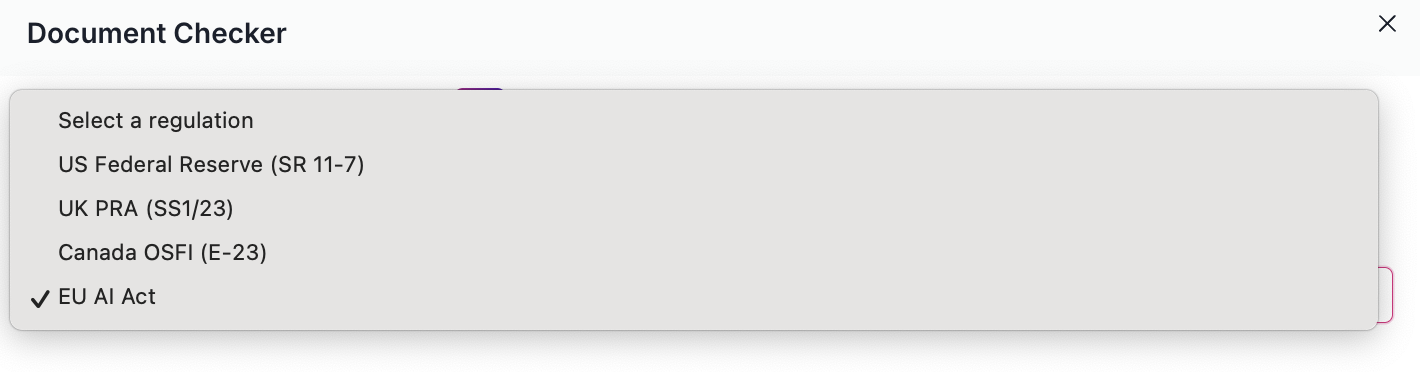
Document checker now supports the EU AI Act
We have added a new option for the EU AI Act in the dropdown menu of the document checker. This update connects you to an assessment with specially designed questions to help you meet the EU AI Act requirements: Check documentation for compliance
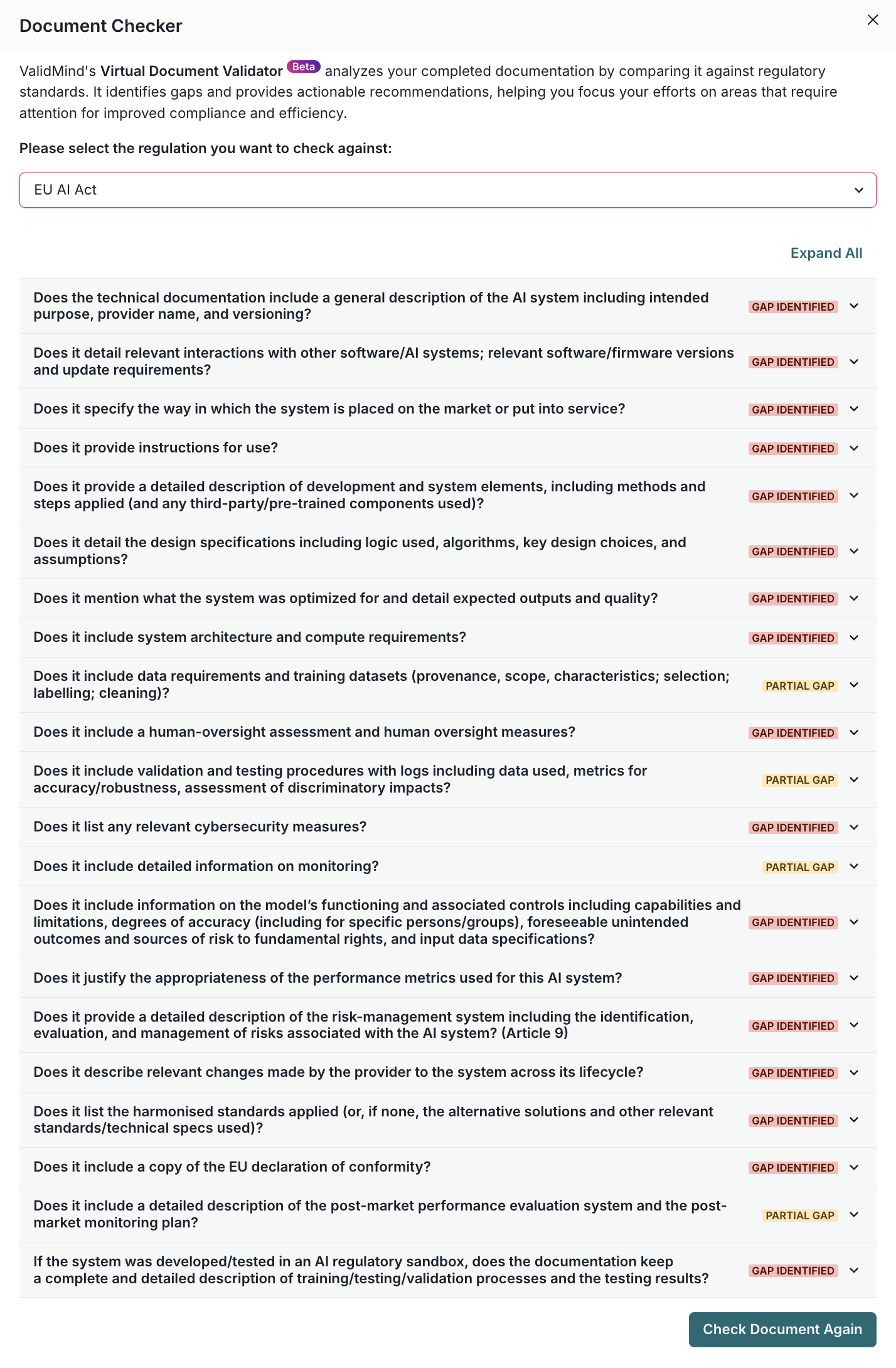
Here is how you can select the EU AI Act option:
Enhancements
Notes tracked on workflow transitions in activity panel
Notes submitted during workflow transitions are now displayed in the workflow activity panel, improving the event row rendering within the ActivityFeedWidget. You can learn more about managing model workflows here: Manage model workflows.
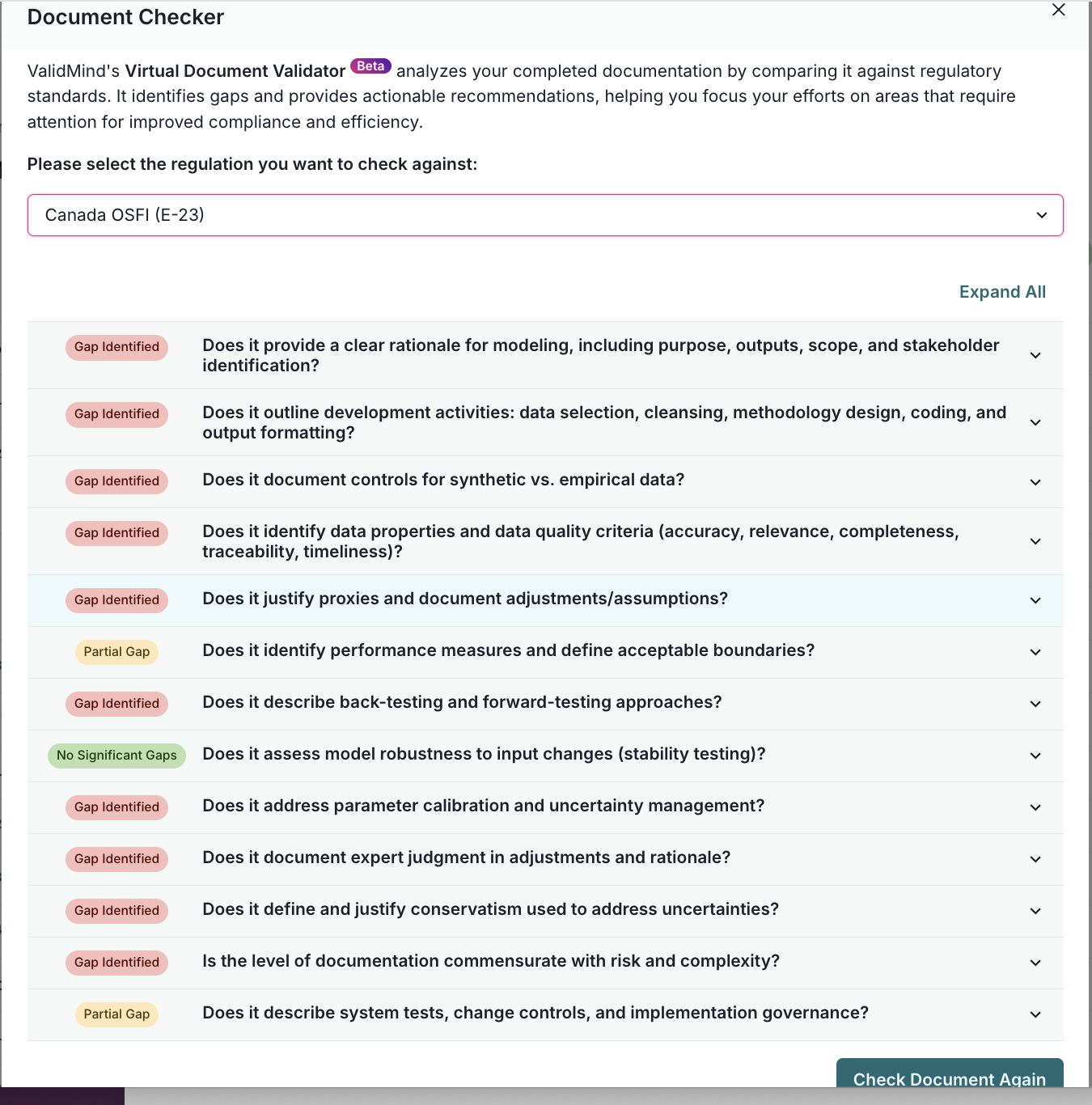
Summary badges added to document checker
The document checker now displays a summary of findings as a badge on each question, improving visual feedback and assessment logic for document validation. For more details, see check documentation for compliance.
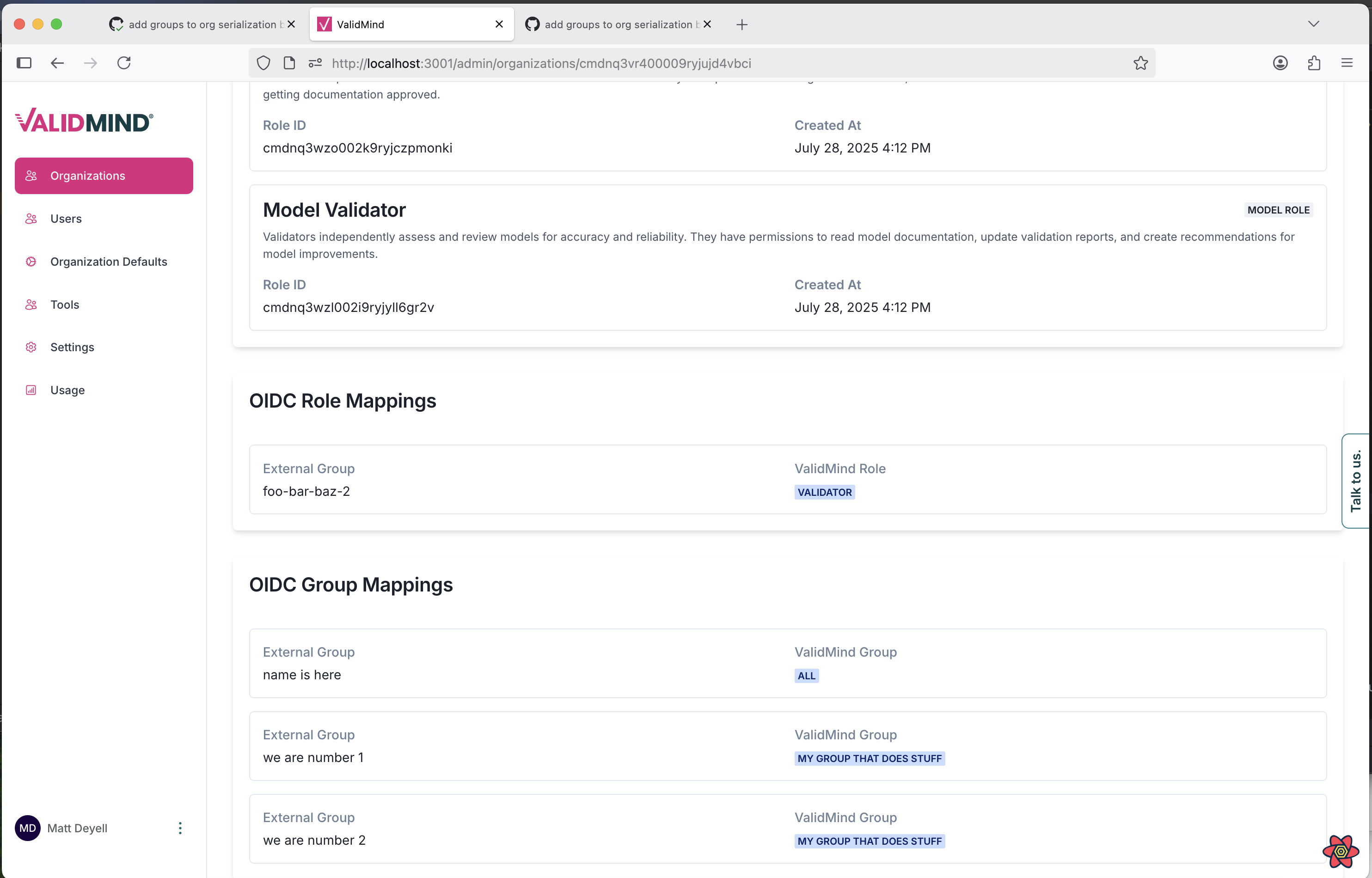
Specify custom group mappings in admin UI
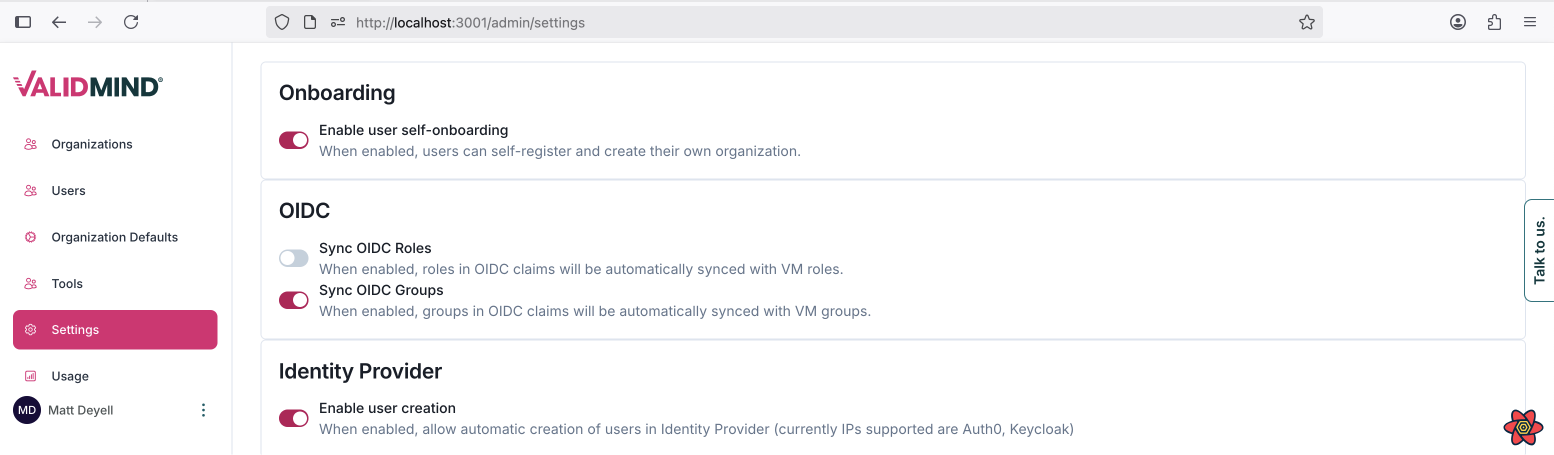
This update enhances the OIDC mapping functionality by adding support for group mappings in addition to role mappings for organizations. You can now assign custom group mappings from IDP groups to ValidMind groups. Follow these steps once Sync OIDC Groups is toggled on in the ValidMind Admin UI:
- On the organizations tab, select the organization for which you want to assign group mappings.
- Click Edit Organization.
- Under
oidc role mappings, enter the token ID on the left and specify the corresponding group on the right. - Once you're finished mapping, click Update Organization.
Select OIDC provider when changing user passwords in multi-OIDC mode
You can now select an OIDC provider when editing a user in the ValidMind platform. This update enhances the EditUserModal component by allowing you to choose from OIDC providers the user has previously signed in with. If an OIDC provider is not editable, it will appear greyed out.
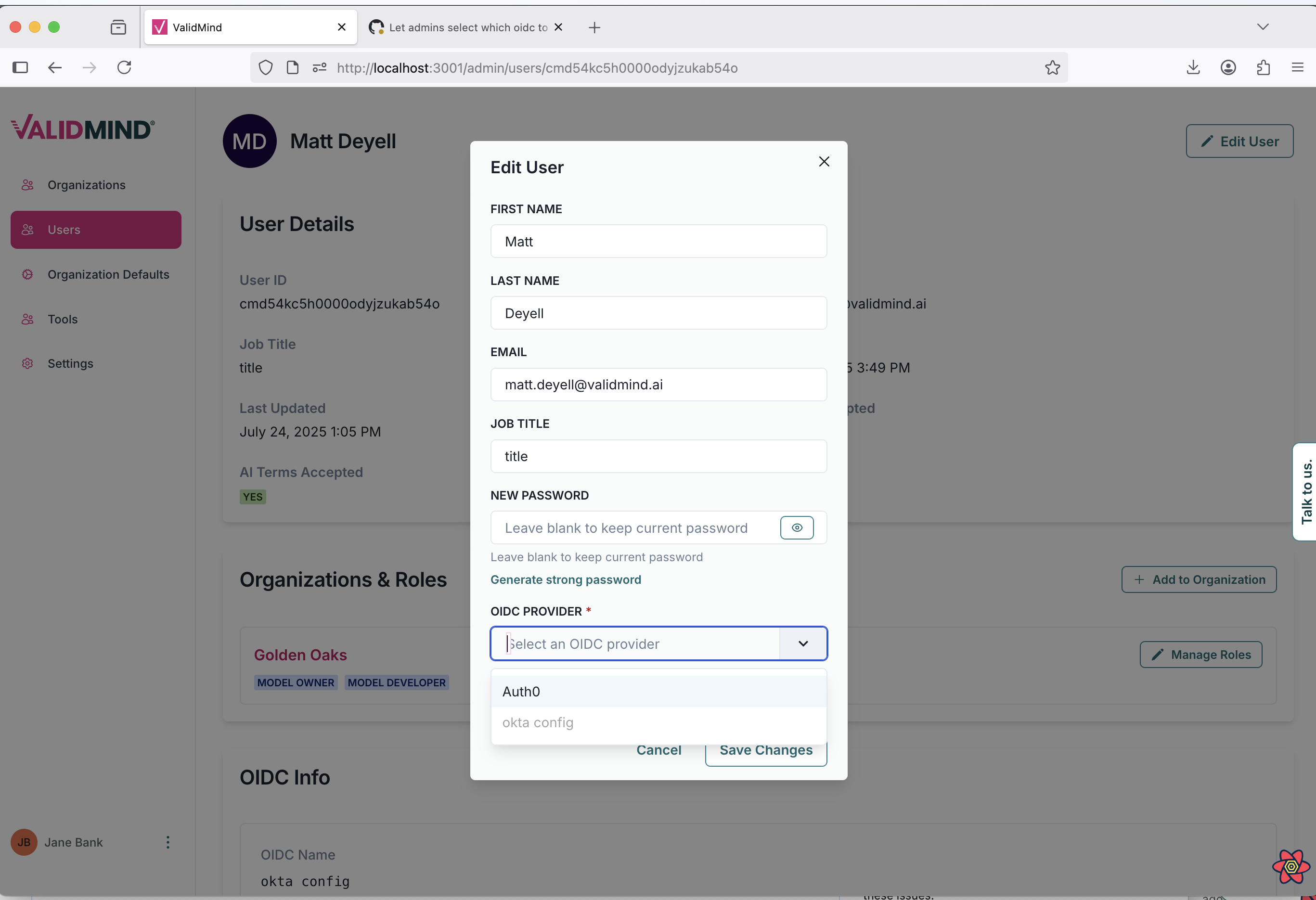
With multi-OIDC mode enabled, you can also select which OIDC provider to use when changing a user's password within the ValidMind platform Admin UI.
Enable sync of OIDC groups in ValidMind admin UI
You can now toggle the synchronization of OIDC groups with ValidMind groups within the ValidMind Admin UI. This update allows you to manage group memberships more efficiently by automatically aligning your identity provider's groups with your ValidMind groups.
For example, if you have a group in your identity provider for developers, this setting can ensure that all members are automatically added to the corresponding ValidMind group, streamlining access management.
Installation
Highlights
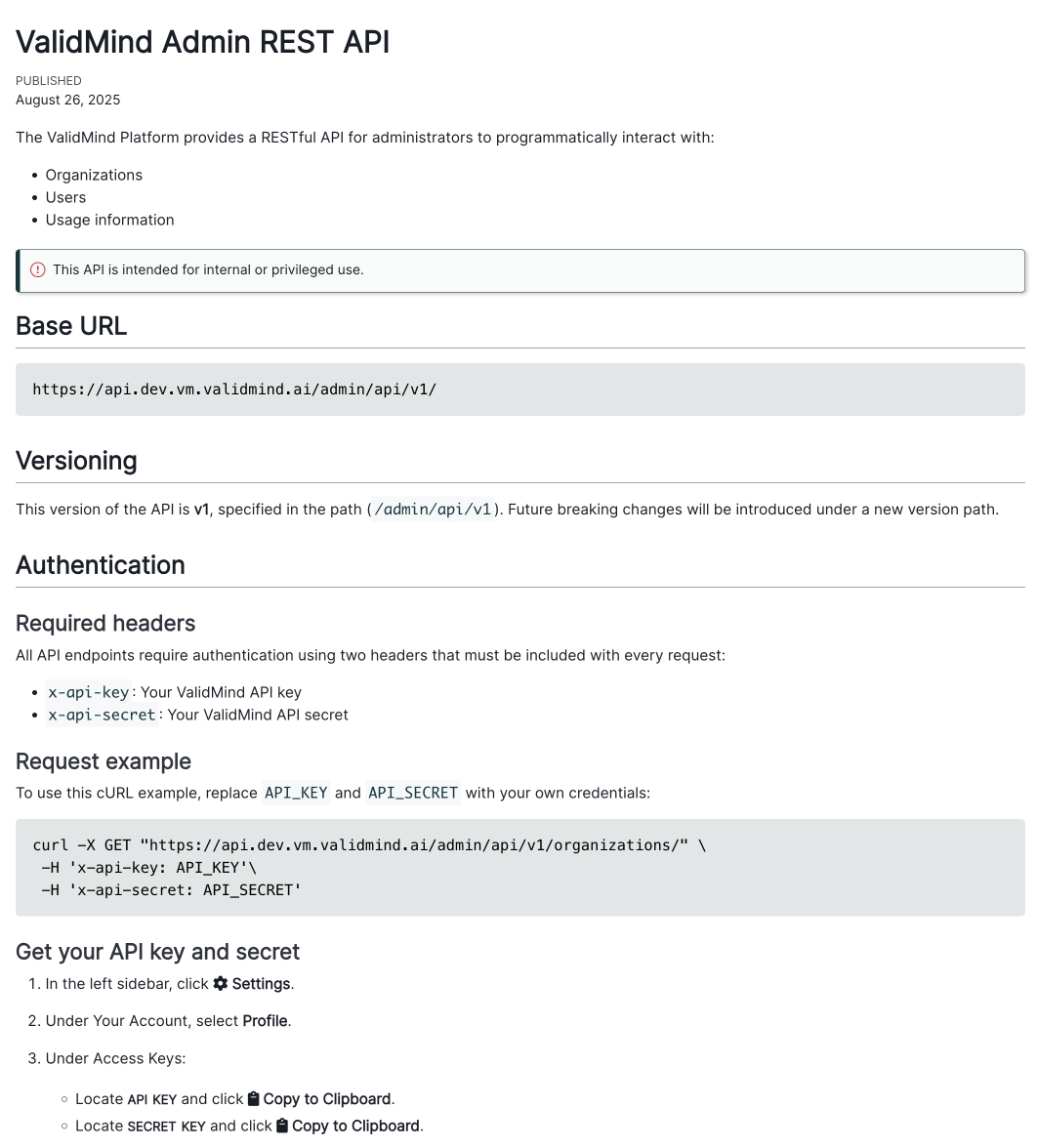
New ValidMind admin API reference
To enable you to manage models, groups, business units, use cases, and templates more efficiently, we have introduced a new API reference: ValidMind Admin REST API
Enhancements
Enable multi-OIDC configuration via ValidMind TOML
You can now enable multiple identity providers by setting the useMultipleOidc global value to true. Ensure you create a secret named validmind-config in the same namespace where the ValidMind deployment is located. This secret must contain the complete contents of validmind_config.toml.
Other changes
Set RUN_MODE=api in API container
This update modifies the Helm chart for the API deployment by adding a new environment variable, RUN_MODE, with a fixed value of "api".
Documentation
Highlights
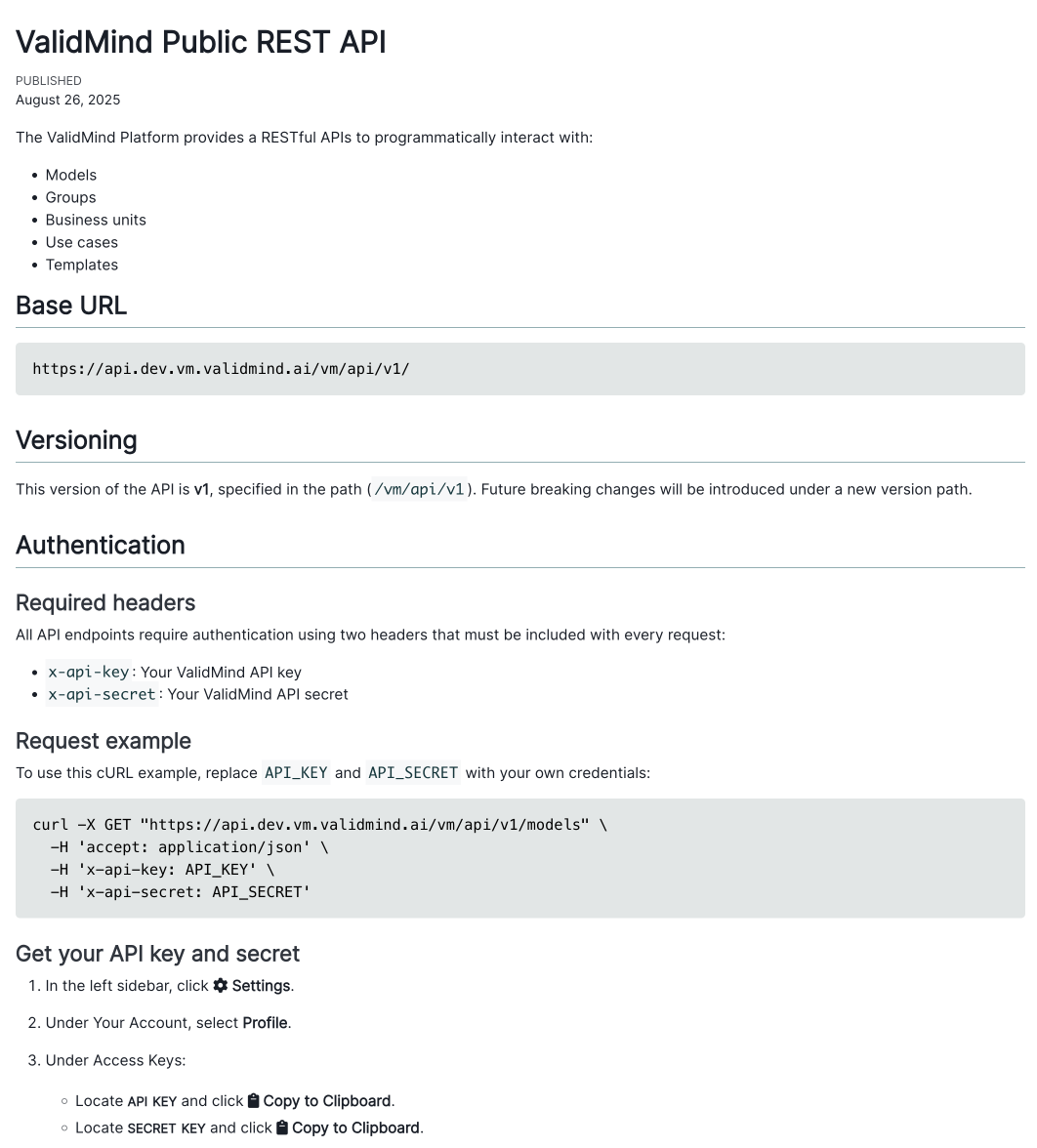
New ValidMind public REST API reference
To enable you to programmatically interact with models, groups, business units, use cases, and templates, we have introduced an API reference in our documentation: ValidMind Public REST API Reference
Bug fixes
Fix codeblock formatting and import modular CSS
We have fixed an issue with codeblock formatting that previously caused incorrect text positioning when specifying a language, such as Python. Codeblocks now display correctly with proper formatting and text alignment.